Dubai court cancels Dh1.35 million Lamborghini lease over unpaid dues
Lessee must return the 2023 Lamborghini and pay Dh49,816 monthly until handover.
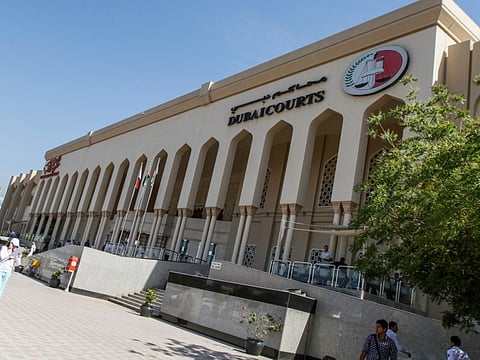
Dubai: A Dubai court has cancelled a Dh1.35 million Lamborghini lease, ordering the lessee to return the luxury sports car and pay Dh349,334.98 in outstanding dues after defaulting on rental payments.
The ruling also requires the lessee to pay Dh49,816.38 in monthly compensation until the vehicle is returned, starting October 16, 2026, as well as 5 per cent annual legal interest on the awarded amount from the date the lawsuit was filed until full payment.
The case involves a 2023 Lamborghini Huracan Sterrato leased under a 24-month agreement signed on October 2, 2025. The contract required an advance payment of Dh155,137.50, followed by monthly instalments of Dh49,816.38.
Get updated faster and for FREE: Download the Gulf News app now - simply click here.
A separate preliminary purchase agreement stipulated that ownership would remain with the leasing company until the lessee had paid all instalments, traffic fines and other outstanding amounts, fulfilled the contractual obligations and completed the final sale agreement.
The company approached the court after the lessee allegedly stopped paying instalments but continued to use the Lamborghini.
Tracking device allegedly tampered with
The leasing company also accused the lessee of failing to pay traffic fines and other vehicle-related expenses.
In a legal notice dated April 24, 2026, it gave the defendants 15 days to settle their dues, warning that it would terminate the agreements, repossess the car and pursue its financial claims if they failed to comply.
The company also submitted a report from its vehicle tracking service provider stating that an unauthorised person had removed the wiring connected to the Lamborghini's monitoring device. It argued that this breached the contractual obligation to safeguard the vehicle and made tracking its location difficult.
The company asked the court to terminate the agreements, order the return of the Lamborghini in its original condition and recover unpaid instalments, traffic fines, Salik charges, insurance, maintenance and other expenses. It also sought compensation for any damage or, if the vehicle could not be recovered, its stated value of Dh1,350,730.50.
Experts inspect Lamborghini and review accounts
The court appointed accounting and automotive experts to examine the agreements, payment records, vehicle condition and tracking system.
During an inspection on September 13, 2026, the experts found the Lamborghini in the defendants' possession, with 3,719 kilometres on the odometer. The car had no technical defects requiring repairs, and its tracking device was functioning normally.
However, they could not determine who had allegedly disconnected the device or establish the cost of replacing it or the duration of any possible downtime. They said the fact that the device was working during the inspection did not rule out an earlier disconnection.
The financial review recorded Dh3,860 in traffic-related payments, including official fees, and Dh316 in Salik charges.
After accounting for payments and adjustments, the experts calculated that Dh287,894.78 remained outstanding as of September 8, 2026. This included Dh285,866.78 in overdue rental instalments, Dh2,020 for a third traffic violation, including official fees, and Dh8 in unpaid Salik charges.
They also calculated Dh175,369.02 in late-payment penalties but left the question of whether these could be enforced to the court, as both parties disputed the relevant contract terms and calculation method.
The experts found no supporting evidence for additional claims relating to vehicle repairs, tracking-device replacement, technical downtime or loss of use.
Lessee disputes outstanding dues
The main lessee disputed the company's calculations, arguing that payments totalling Dh555,957.52 should be deducted from the amount claimed. He sought a detailed review of the payment records and challenged the late-payment penalties.
He also argued that the expert report had not established that he was responsible for the alleged disconnection of the tracking device.
The second defendant, named as an additional driver, denied any personal or joint liability for the lease payments. He maintained that some documents had been signed on behalf of his father, with the company's knowledge and approval.
The leasing company, however, sought to hold both defendants jointly liable.
Court orders Dh349,334 in outstanding dues
The court found that the main lessee had breached the agreement by failing to pay instalments on time. Under the contract, delays exceeding 14 days entitled the leasing company to recover the vehicle. Despite receiving a legal notice demanding payment, the lessee failed to settle the dues.
It also ruled that the preliminary purchase agreement was conditional on fulfilling the lease, meaning the lessee could no longer acquire ownership of the Lamborghini.
Accepting the experts' calculations, the court added Dh61,440.20 in rental charges for September 9 to October 15, bringing the outstanding amount to Dh349,334.98.
Court rejects Dh175,369 in late-payment penalties
The court dismissed the company's claim for Dh175,369.02 in penalties. Although the contract stipulated a daily penalty of 2 per cent, capped at 50 per cent of the monthly instalment, the court ruled that the clause was no longer enforceable after the lease was cancelled.
It also rejected the company's request to hold the additional driver jointly liable, finding no contractual provision making him responsible for the main lessee's financial obligations.
Monthly compensation until vehicle is returned
The court ruled that future instalments could no longer be claimed as rent. However, the lessee remained liable for continued use of the Lamborghini.
It therefore ordered monthly compensation of Dh49,816.38, equivalent to the agreed rental rate, from October 16, 2026, until the vehicle is physically returned.
Final ruling
The court also ordered the main lessee to return the 2023 Lamborghini Huracan Sterrato, including its documents and accessories, and pay 5 per cent annual legal interest on the awarded amount from the lawsuit filing date until full payment, in addition to court fees, expenses and Dh1,000 in legal fees.
All remaining claims were dismissed.