Holiday season: 7 cyber scams to watch out for
Fake delivery alerts, shopping fraud and banking scams can put your money at risk
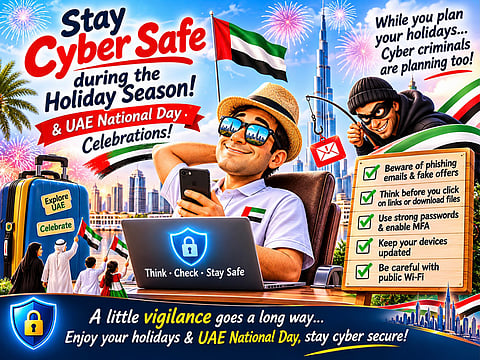
The festive season is a time for shopping, travel, celebrations, and connecting with family and friends. Unfortunately, it is also one of the busiest periods for cybercriminals. With increased online activity, holiday deals, delivery notifications and travel bookings, scammers take advantage of the rush to trick people into revealing personal information, passwords and banking details.
Get updated faster and for FREE: Download the Gulf News app now - simply click here.
Whether you're shopping online, travelling abroad or simply checking your emails, a few simple precautions can help keep you and your family safe.
Common holiday scams to watch out for
1. Fake delivery and courier messages
Scammers send SMS messages, emails or WhatsApp / Social media notifications pretending to be courier companies, asking you to click links to track parcels or pay small delivery fees.
2. Online shopping fraud
Be cautious of deals that seem too good to be true. Fake websites and social media advertisements often offer heavily discounted products to steal payment information.
3. Bank and payment scams
Never trust urgent requests asking you to update banking details, verify accounts or transfer money. Always contact your bank through official channels.
4. Impersonation attacks
Criminals increasingly pose as employers, government agencies, suppliers, celebrities or even family members to create a sense of urgency and pressure victims into acting quickly.
5. QR code scams
Before scanning a QR code on flyers, emails, advertisements or packages, verify its source. Fraudulent QR codes can redirect users to fake login pages designed to steal credentials.
Simple cyber safety habits
Enable Multi-Factor Authentication (MFA) on email, banking, social media and work accounts.
Keep your mobile devices, laptops and applications updated with the latest security patches.
Avoid using public Wi-Fi for online banking, payments or accessing sensitive information.
Use strong and unique passwords for different online services.
Be cautious when sharing travel plans or personal information on social media.
Verify unexpected requests through a phone call or another trusted communication channel.
Pause before clicking links or opening attachments, especially in unsolicited messages.
Protecting your digital identity
Identity theft remains one of the fastest-growing cybercrime trends globally. Once criminals gain access to an email account, they can often reset passwords, intercept communications and compromise other linked services.
Protect yourself by:
Monitoring account activity regularly.
Reviewing login notifications and security alerts.
Removing unused applications and permissions.
Keeping recovery information and backup contacts up to date.
Being alert to unusual login prompts or one-time password (OTP) requests.
When in doubt, don't click
One of the most effective cybersecurity controls remains human vigilance. Cybercriminals rely on urgency, curiosity and trust. If a message pressures you to act immediately, requests confidential information or seems unusual, take a moment to verify before responding.
A Shared Responsibility
Cybersecurity is no longer just an IT issue. It is a shared responsibility for individuals, families, businesses and communities. By adopting safe online habits and staying informed about the latest scams, we can all help reduce cyber risks and protect our personal information during the holiday season and beyond.
Remember: Think before you click, verify before you trust, and secure your digital identity as carefully as you protect your physical wallet. A few extra seconds of caution can prevent significant financial loss, identity theft and unnecessary stress.


