New careers, old curricula: Are schools keeping up?
Schools must look beyond academic success to equip students for a rapidly changing world
Imagine a young boy sitting in an elegant restaurant with his family. As he finishes his dessert, he begins licking the remaining chocolate from his fingers, unaware of the disapproving glances around him.
The boy is academically successful, capable of solving mathematical equations and explaining scientific concepts. Yet, something as simple as dining etiquette has escaped him.
While parents certainly have a responsibility to teach manners, should etiquette and social conduct also have a place in school curricula?
Fast-forward ten years.
The boy is now attending university abroad. Living independently for the first time, he struggles to prepare a nutritious meal and increasingly relies on expensive takeaway food. Despite studying nutrition in science, he has never learned how to cook.
Meanwhile, his limited allowance and part-time earnings barely cover his expenses. He begins borrowing money without fully understanding interest rates or debt.
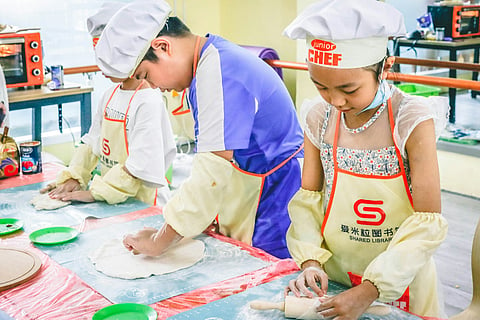
Would compulsory lessons in food technology and financial literacy have better prepared him for independence?
Fast-forward again.
Explaining concepts
Now attending a job interview, he is asked to explain a concept from a university subject in which he earned an A. He struggles. Throughout his studies, he had relied heavily on artificial intelligence to complete assignments, often accepting generated answers without questioning them.
His grades reflected academic success, but did they reflect genuine understanding? Isn’t it about time to introduce critical thinking as a subject by itself in our curriculum?
Later, he encounters a colleague who repeatedly undermines him. Unsure how to respond, he struggles to manage the situation professionally. Could earlier lessons in emotional intelligence, assertive communication and conflict resolution have helped?
These scenarios raise an important question: Are our school curricula preparing children for the realities of life, or primarily for examinations?
But the issue extends beyond practical life skills.
Dramatic career changes
Consider how dramatically careers have changed. Today, influencers can shape consumer behaviour, build businesses and command audiences larger than those of traditional media outlets. TikTok creators, livestreamers, professional gamers and digital content entrepreneurs are earning livelihoods through occupations that barely existed in their current forms a generation ago.
Young people increasingly look to these personalities for recommendations, opinions and even news. Yet how many schools introduce students to the opportunities, responsibilities and risks associated with these emerging professions?
Even our reading habits have changed.
Many readers have moved from printed newspapers to digital platforms. While information is more accessible than ever, reading online often means navigating advertisements, pop-ups, notifications and endless links competing for attention.
What was once a quiet, uninterrupted reading experience can become a fragmented exercise in scrolling, clicking and resisting distractions. The pleasure of sustained reading risks being replaced by hurried consumption of information.
Also Read: Let children discover what they can do
Are we teaching students how to protect their attention, read critically and engage deeply with information in an increasingly distracting digital environment?
Attention management
Perhaps digital wellbeing, media literacy and attention management deserve a more prominent place in school curricula.
None of this means abandoning mathematics, science or literature. These subjects remain essential. However, curricula should evolve alongside the societies they serve.
Schools could introduce compulsory practical modules in financial literacy, food technology, emotional intelligence and responsible AI use, alongside exploratory electives in digital content creation, influencer marketing, entrepreneurship and emerging technologies.
Such offerings could help students discover career opportunities they might never otherwise consider, while equipping them with skills they will use throughout life.
Education should not simply reproduce the curriculum inherited from previous generations.
If the world is constantly reinventing itself, shouldn’t we be equally willing to reinvent what we teach?
Bernadette Guirguis is Assistant Professor, Zayed University


