The future of higher education rests on its ability to innovate
Gulf News’ University Reset Forum puts the relevance of degrees in the AI era in focus
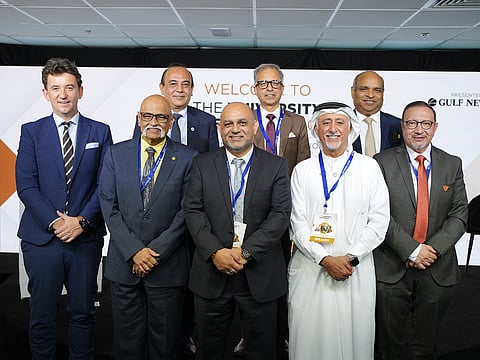
With technology changing the skills required in the workplace, universities must reassess the relevance of their curricula and the value of the qualifications they offer, said Dr Eesa Mohammed Al Bastaki, President of the University of Dubai, in his keynote address at the University Reset Forum 2026.
“For centuries, universities have promised students three things: knowledge, qualifications, and opportunities. But today, that promise is being challenged,” said Dr Al Bastaki.
Gulf News hosted the inaugural edition of the University Reset Forum 2026 earlier this week, bringing together university presidents, vice-chancellors, deans and senior higher education decision-makers from across the UAE.
The first forum of its kind in the country to facilitate executive-level dialogue among education leaders, the event sparked discussions on institutional leadership, AI, graduate employability, research excellence and how to make higher education truly impactful.
Held under the theme Reimagining Higher Education: Who Will Lead in 2035?, the forum explored what universities must do to remain relevant and globally competitive.
The changing demands on universities
Dr Al Bastaki highlighted how advances in artificial intelligence, automation, robotics, biotechnology and quantum computing are challenging traditional models of higher education.
“These technologies are not merely changing how we teach; they are transforming what we teach, why we teach, and most importantly, how we prepare our graduates for a future that is increasingly unpredictable,” he said.
With AI already capable of performing complex analytical, technical and cognitive tasks, Dr Al Bastaki stressed the need for universities to reconsider the capabilities they develop in students. Employers are increasingly placing greater importance on graduates’ ability to apply their knowledge and deliver results rather than on academic qualifications alone.
Vijay Vaghela, CEO of Gulf News, in his inaugural address, highlighted the significant progress the UAE has made in higher education in a relatively short period.
“With 104 higher education institutions, more than 2,500 academic programmes and over 218,000 students enrolled in 2025-26, the country has built a higher education sector of considerable scale,” he said.
Supporting national education ambitions
Vaghela also highlighted Gulf News’ commitment to working closely with academic institutions to support the UAE’s education priorities through its content, exhibitions and industry forums.
“We are always looking at what can be improved, how we can move forward and what more we can do,” he said.
Through 15 editions of Edufair across two emirates, Gulf News has welcomed more than 100,000 students and families. This year, it has expanded its education portfolio with LevelUp, a new exhibition dedicated to postgraduate, doctoral and executive education, as well as reskilling.
“We are open to new ideas and priorities, and we want to work with institutions through our content and platforms to support the changes needed in education,” Vaghela said.
Over the next 10 years, Dr Al Bastaki stressed, universities will need to make fundamental changes to their educational models. Simply introducing new technologies or updating existing programmes will not be sufficient. Institutions must reconsider the purpose of university education, ensure that learning translates into practical capabilities and place innovation at the heart of their institutional strategies.
“The university of 2035 cannot simply be an improved version of the university of 2026. It must be fundamentally reimagined, and that takes innovation,” he said.


