A recipe to rise higher
For veteran pastry maker Ann Amernick, baking a puff is a job she has perfected to an art
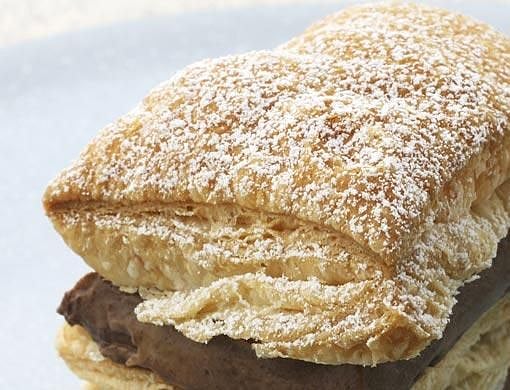
To hear Ann Amernick call a baking technique "daunting" is to imagine that for anyone else it is all but impossible. In 33 years as a pastry chef, after all, Amernick has learnt enough tricks that few desserts would seem to scare her.
Then again, nothing is quite like puff pastry, named mille-feuille in French, for the "thousand leaves" of dough created by a sometimes-painstaking process that bedevils neophyte bakers - and some veterans, too.
"It took me a long time to do it," Amernick, 63, says while rolling out dough in one of two kitchens in her home. "You read about it and you say, 'OK, I'm going to bite the bullet and do it,' and then you go and do it and you have a disaster."
Committed lot
As she steps back from day-to-day duties at Palena, the Washington restaurant she co-owns with Frank Ruta, Amernick does not have many baking disasters anymore. With her recently released third cookbook, The Art of the Dessert ($40 or Dh147), co-written with Margie Litman, she hopes her technician's approach can help home bakers and professionals alike. But this is a book with multi-component recipes aimed squarely at the committed.
These days, it takes commitment to attempt classic puff pastry. Now there is 'rough puff', that time-saving cross between pie dough (the butter is all cut in, but left in large pieces) and puff pastry dough (it is folded and turned many times). But, Amernick's technique is the one that gets distinct layers.
Her chocolate napoleon at Palena showcases that achievement. With layers exponentially created by a series of folding, turning and rolling, this is oven magic. What goes in at less than 1/4 inch can inflate to three inches high. While other people's versions are soft, gooey inside and bland, Amernick's is shatteringly crisp, meltingly tender and beyond buttery.
It was not always thus. Amernick, one of most acclaimed pastry chefs in the US, found puff pastry vexing until several years ago, when she bought a small bakery in Wheaton and learnt a new technique from the previous owner.
Technique is the secret
Rather than the classic method of enclosing a block of butter inside an envelope of flour before beginning the folding and turning and rolling, she cuts thin slices of butter on a mandoline or electric slicer, forms them into sheets sized to perfectly fit the dough, then folds the dough around them.
Amernick's experience with puff pastry goes all the way back to her days making desserts at Georgetown's Big Cheese in the 1970s and spans her work at the White House, Jean-Louis at the Watergate, Cashion's Eat Place, her eponymous bakery and Palena, among others.
While demonstrating her recipe on a recent afternoon, Amernick, who is petite but with broad shoulders and muscular arms from weightlifting, works quickly and less gingerly than a more timid home cook might. "I'm not afraid of the butter. I'm not afraid of touching it," she says as she lays a sheet on the dough.
While rolling, turning, cutting and baking the puffs, Amernick shares some other secrets not included in The Art of the Dessert: The key to keeping her justifiably famous caramels free of graininess, for example, is to protect them from the slightest jostle while they are chilling, even from the hum of a refrigerator motor.
Amernick is scaling back her Palena work to the job of a co-owner, including representing the restaurant at events. She is focussing on promoting the book, taking some classes and making wedding cakes for private clients, all the while hoping to ease a path to retirement.
That may have something to do with why you will not find that caramel recipe in print: "It's all that I've got," she says. "I hope I may be able to do something with those caramels."
Sign up for the Daily Briefing
Get the latest news and updates straight to your inbox
Network Links
GN StoreDownload our app
© Al Nisr Publishing LLC 2026. All rights reserved.