Dubai ranks among world's 20 leading cities, Abu Dhabi rises four places in Kearney rankings
Results show UAE’s growing global influence, supported by economic diversification
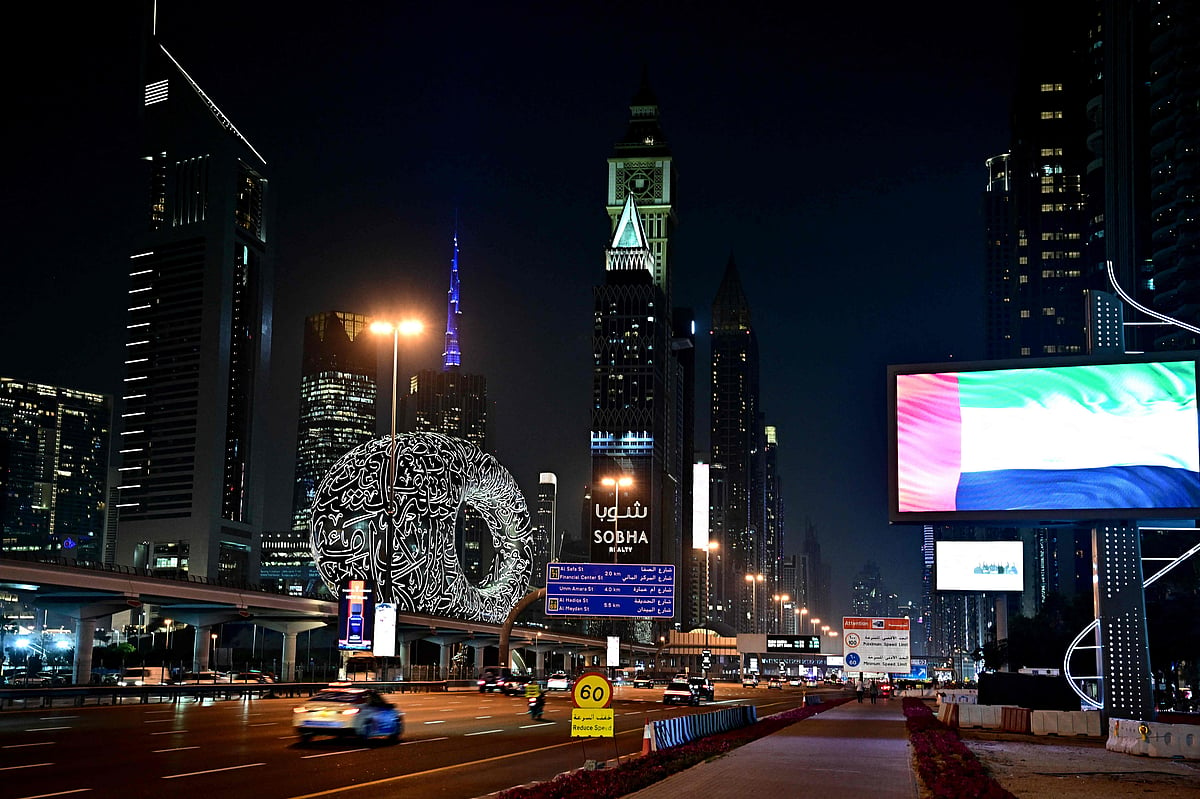
Dubai: Dubai has strengthened its position among the world’s leading cities, entering the top 20 of the 2026 Global Cities Index for the first time, while Abu Dhabi has moved up four places to rank 45th, according to Kearney’s latest Global Cities Report.
Dubai has secured 20th place, improving on its 23rd position in 2025, while Abu Dhabi advanced from 49th to 45th. The results have reinforced the UAE’s growing presence on the global stage as both emirates continue to invest in economic diversification, business infrastructure, talent, and innovation.
The report, which evaluates 158 cities worldwide, has found that Gulf cities continued to strengthen their global positions in 2025 despite increasing geopolitical and economic uncertainty. While improvements have been more incremental than in previous years, the region maintained its momentum, particularly in economic performance and innovation.
“Nearly all of the Gulf’s cities benefited from improved economics, and the region distinguished itself on innovation. Amid a more challenging operating environment, leaders proved the value of committing to a well-defined, multiyear investment strategy,” stated Valentin Lavaill, executive director of Kearney Foresight MEA.
Get updated faster and for FREE: Download the Gulf News app now - simply click here.
Dubai enters the global top 20
Dubai’s rise to 20th place has marked a significant milestone for the emirate, which continues to boost its appeal as an international centre for business, finance, tourism, and talent.
The Global Cities Index measures how effectively cities attract, retain, and generate global flows of people, capital, and ideas. It uses 31 indicators across five dimensions, including business activity, human capital, information exchange, cultural experience, and political engagement.
Dubai’s improved ranking has placed it in the top quintile of the index, putting its position among the world’s most globally connected and influential urban centres.
The global top five has remained unchanged from the previous year, with New York, London, Paris, Tokyo, and Singapore retaining their respective positions.
Abu Dhabi climbs as economic diversification delivers
Abu Dhabi has also recorded progress, moving up four places to 45th in the global rankings.
Kearney has attributed the emirate’s improvement to its sustained economic diversification programme and the expansion of its non-oil sectors, which have supported 18 consecutive quarters of GDP growth.
The report has revealed the continued development of Abu Dhabi Global Market, the emirate’s international financial centre, and Khalifa Economic Zones Abu Dhabi, which supports industrial development and investment.
Apart from its financial and industrial ambitions, Abu Dhabi has invested in strengthening its position as a regional cultural destination, while continuing to develop its tourism and renewable energy sectors.
These efforts have formed part of a broader strategy to build a diversified economy, attract international businesses, and create new opportunities across industries.
Gulf cities demonstrate economic resilience
Beyond the UAE, the report has pointed to improving economic conditions across the Middle East, with the region recording the strongest increase in total foreign direct investment in 2025 compared with other regions.
Economic performance has improved in 13 of the 16 cities assessed, while innovation proved relatively resilient, recording the smallest regional decline.
Kearney has mentioned Dammam, Abu Dhabi, and Muscat as examples of cities translating national investment strategies into increased foreign direct investment.
The findings have suggested that continued investment in infrastructure, business development, and innovation is helping Gulf cities strengthen their international competitiveness, even as the global operating environment becomes more challenging.
Future growth will depend on innovation and collaboration
While the Global Cities Index measures current performance, Kearney’s Global Cities Outlook takes a forward-looking approach, assessing the potential of cities across four dimensions, including personal well-being, economics, innovation, and governance.
The 2026 Outlook rankings have placed Singapore, London, San Francisco, Seoul, and New York in the top five.
For the Middle East, the next phase will depend on how successfully cities deliver their development strategies in a changing global environment.
Another key theme in the report has been “citycraft,” a term Kearney uses to describe how cities increasingly collaborate directly with international counterparts to advance shared interests and address common challenges.
As national governments place greater emphasis on strategic autonomy and bilateral relationships, cities are looking at new ways to strengthen their international partnerships.
Kearney has identified opportunities for Gulf cities to work together on shared infrastructure, artificial intelligence development and governance, talent attraction, and business corridors.
“Many of the factors that contribute to the business landscape are set at the national level,” said Rudolph Lohmeyer, partner and chairman of Kearney Foresight Middle East and Africa.
“Cities are taking matters into their own hands by engaging with their peers to advance shared interests in what we call ‘citycraft.’ Through these innovative forms of collaboration, they are building coalitions around shared infrastructure, common standards, investment partnerships, and technical expertise.”
For the UAE, Dubai’s entry into the global top 20 and Abu Dhabi’s continued rise underline the importance of long-term investment and economic diversification. Maintaining this momentum will depend on continued progress in innovation, talent development, and international cooperation as competition between global cities intensifies.
Network Links
GN StoreDownload our app
© Al Nisr Publishing LLC 2026. All rights reserved.